Favorite Tips About What Is A DNA Loop
Unraveling the Mystery
1. The Basic Building Blocks
Okay, so you've probably heard about DNA, the famous double helix that holds the blueprints of life. But it's not just some long, straight ladder sitting neatly in the nucleus of a cell. Imagine trying to cram a garden hose several miles long into a small closet. It wouldn't just lie there; it would coil and twist! That's kind of what DNA does, and sometimes those coils form specific structures called loops. Think of it like tying a knot in that garden hose — except these "knots" (loops) have a very important purpose.
DNA loops are formed when two distant regions of the DNA molecule come close together, creating a loop of DNA in between. It's like taking a piece of string, grabbing two spots along its length, and pulling them together. The bit of string left hanging in the middle? That's the loop. But these aren't random accidents. They are highly regulated and play a crucial role in gene expression.
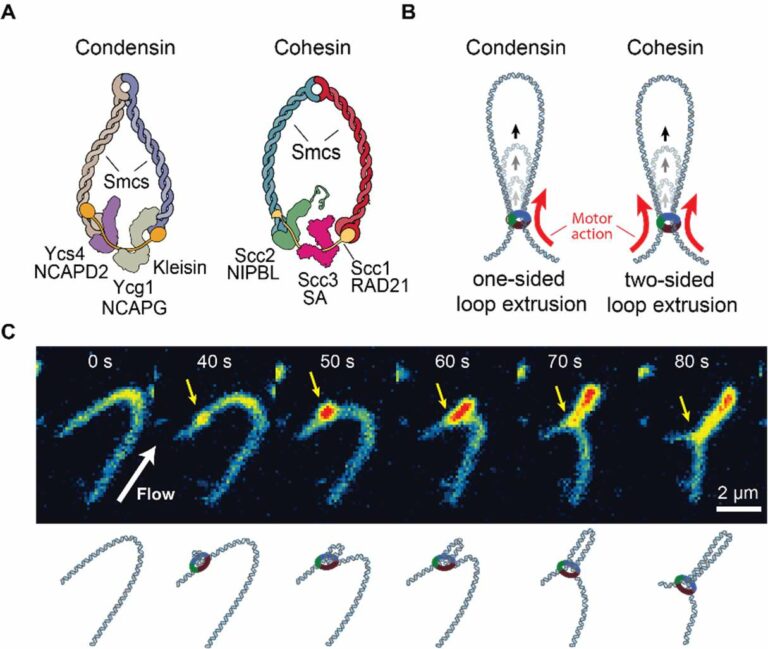
So, what holds these loops together? Well, specialized proteins act like tiny molecular clamps, grabbing onto those specific DNA sequences and bringing them into proximity. These proteins are like the little helpers who tie our string at the selected spots. Without these clamps, the DNA would just be a tangled mess, unable to properly form these functional loops. The most famous of these helpers is a protein complex called cohesin, which acts like a ring around the DNA.
The formation of DNA loops isn't just some biological quirk; it's a fundamental mechanism that dictates how our genes are expressed. It helps to determine which genes are turned on or off, and how strongly they are expressed. Think of DNA loops as the orchestra conductors of our cells, making sure each gene plays its part at the right time and in the right way. It's a beautifully orchestrated dance at the molecular level.

Why Do These Loops Even Matter? The Big Picture
2. Gene Regulation
Imagine a control panel with hundreds of switches. Some turn on lights, others start machines, and still others sound alarms. DNA loops are similar; they play a crucial role in gene regulation. By bringing specific regions of DNA together, they can either enhance or suppress gene expression. This is like having a dimmer switch for genes, allowing for fine-tuned control over cellular processes.
For example, a DNA loop might bring an enhancer region (a DNA sequence that boosts gene expression) close to a promoter region (the starting point for gene transcription). This interaction cranks up the production of the corresponding protein. On the other hand, a loop could bring a silencer region (a DNA sequence that inhibits gene expression) near a promoter, effectively shutting down that gene. The precise positioning orchestrated by DNA loops is essential for the proper functioning of our cells.
Think of it this way: if you want to make a cake, you need to bring the ingredients (flour, sugar, eggs) together. DNA loops do the same thing for gene expression, bringing the necessary DNA elements together to activate or deactivate a gene. And just like with baking, the right combination and timing are crucial for a delicious outcome (or, in this case, a healthy cell!).
Disruptions in DNA looping can have serious consequences. If a gene is inappropriately turned on or off, it can lead to a variety of diseases, including cancer. Understanding how DNA loops work is therefore crucial for developing new therapies that target these aberrant structures and restore normal gene expression. Basically, if the chef screws up the ingredient mix, the cake's gonna be bad.
Frontiers Sensing RLoopAssociated DNA Damage To Safeguard Genome
The Dynamic Nature of Loops
3. A Constant State of Flux
Its easy to picture these DNA loops as fixed structures, but the reality is far more dynamic. They are constantly forming and dissolving, responding to the changing needs of the cell. Think of it like a construction site where scaffolding is constantly being erected and taken down depending on the task at hand. DNA loops are similar, appearing when needed to regulate gene expression and then disappearing when their job is done.
The formation and dissolution of DNA loops are regulated by various factors, including signaling pathways, environmental stimuli, and developmental cues. For example, a cell might form a loop in response to a hormonal signal, activating a specific set of genes required for that signal. Once the signal is gone, the loop dissolves, and the genes return to their baseline expression level. It's a sophisticated feedback mechanism that ensures cells respond appropriately to their environment.
The proteins that mediate loop formation, like cohesin, are also subject to regulation. They can be modified by chemical tags that either promote or inhibit their binding to DNA. This adds another layer of complexity to the process, allowing for even finer control over gene expression. It's like having a remote control for the scaffolding, allowing you to raise or lower it at will.
This dynamic nature of DNA loops is essential for cellular plasticity, allowing cells to adapt and respond to changing conditions. It's not just about turning genes on or off; it's about orchestrating a complex dance of gene expression that ensures cells can thrive in a dynamic environment. Imagine a chameleon changing its color to blend into its surroundings; DNA loop dynamics allow cells to do something similar at the molecular level, adapting to their changing environment.

Researching Loops
4. Probing the Genome
So, how do scientists actually study these tiny, dynamic structures? It's not like you can just look at them under a regular microscope! Researchers use a variety of sophisticated techniques to visualize and analyze DNA loops. One of the most powerful methods is called Chromosome Conformation Capture (3C) and its derivatives (Hi-C, 4C, etc.). Think of these methods as genomic sonar, allowing scientists to map the interactions between different regions of DNA.
3C-based techniques work by crosslinking DNA in cells, effectively freezing the interactions between different regions. The DNA is then cut into fragments, and fragments that are physically close together are ligated (joined) together. By sequencing these ligated fragments, scientists can create a map of all the interactions in the genome, revealing the presence and location of DNA loops. Its like taking a snapshot of the DNA's three-dimensional structure.
Another powerful technique is microscopy-based imaging, which allows scientists to directly visualize DNA loops in cells. Using fluorescently labeled probes that bind to specific DNA sequences, researchers can track the movement of these sequences and observe the formation and dissolution of loops in real-time. Imagine watching a molecular ballet unfold before your eyes!
These techniques are constantly being refined and improved, allowing scientists to gain an ever-more-detailed understanding of the role of DNA loops in gene regulation and cellular function. As technology advances, researchers are able to probe the genome with greater precision and uncover new insights into the complexities of DNA looping. It's an exciting time to be studying these fascinating structures, as new discoveries are being made all the time.
DNA Loops and Disease
5. The Dark Side of Loops
As we've discussed, DNA loops are essential for the proper functioning of our cells. But what happens when these loops malfunction? The consequences can be significant, leading to a variety of diseases, including cancer and developmental disorders. It's like a symphony orchestra where one of the instruments is out of tune; the whole performance suffers.
In cancer, for example, disruptions in DNA looping can lead to the inappropriate activation of oncogenes (genes that promote cell growth and division) or the inactivation of tumor suppressor genes (genes that inhibit cell growth). This can result in uncontrolled cell proliferation and the formation of tumors. Imagine a car with a stuck accelerator, constantly speeding up and unable to stop.
Developmental disorders can also arise from defects in DNA looping. During development, precise gene expression is crucial for the proper formation of tissues and organs. If DNA loops are not formed correctly, it can disrupt the normal developmental program, leading to birth defects or other abnormalities. It's like a builder who doesn't follow the blueprints correctly, resulting in a structurally unsound building.
Understanding the role of DNA loops in disease is crucial for developing new therapies that target these aberrant structures. By identifying the specific loops that are disrupted in a particular disease, researchers can design drugs that restore normal loop formation and gene expression. This could lead to new treatments for a wide range of diseases, offering hope for improved outcomes and a better quality of life. It's like finding the right tool to fix a broken machine, restoring it to its proper functioning.
FAQ
6. Frequently Asked Questions about DNA Loops
Q: Are DNA loops permanent structures?
A: Nope! They're super dynamic, constantly forming and dissolving as needed by the cell. Think of them more like temporary scaffolding on a building than permanent fixtures.
Q: What happens if a DNA loop breaks?
A: If a loop breaks, the gene regulation it was controlling can go haywire. This can lead to a whole host of problems, including diseases like cancer. It's like losing the signal on your favorite radio station — everything just gets static-y.
Q: Can we control DNA loops to cure diseases?
A: That's the million-dollar question! Scientists are working hard to figure out how to manipulate DNA loops to correct gene expression and treat diseases. It's still early days, but the potential is huge.